
Websites for Tradies in NZ: What Actually Matters
BLOG
What separates a website that gets your phone ringing from an online brochure: the quote path, mobile speed, service areas and proof. Explained plainly, whoever you end up hiring.
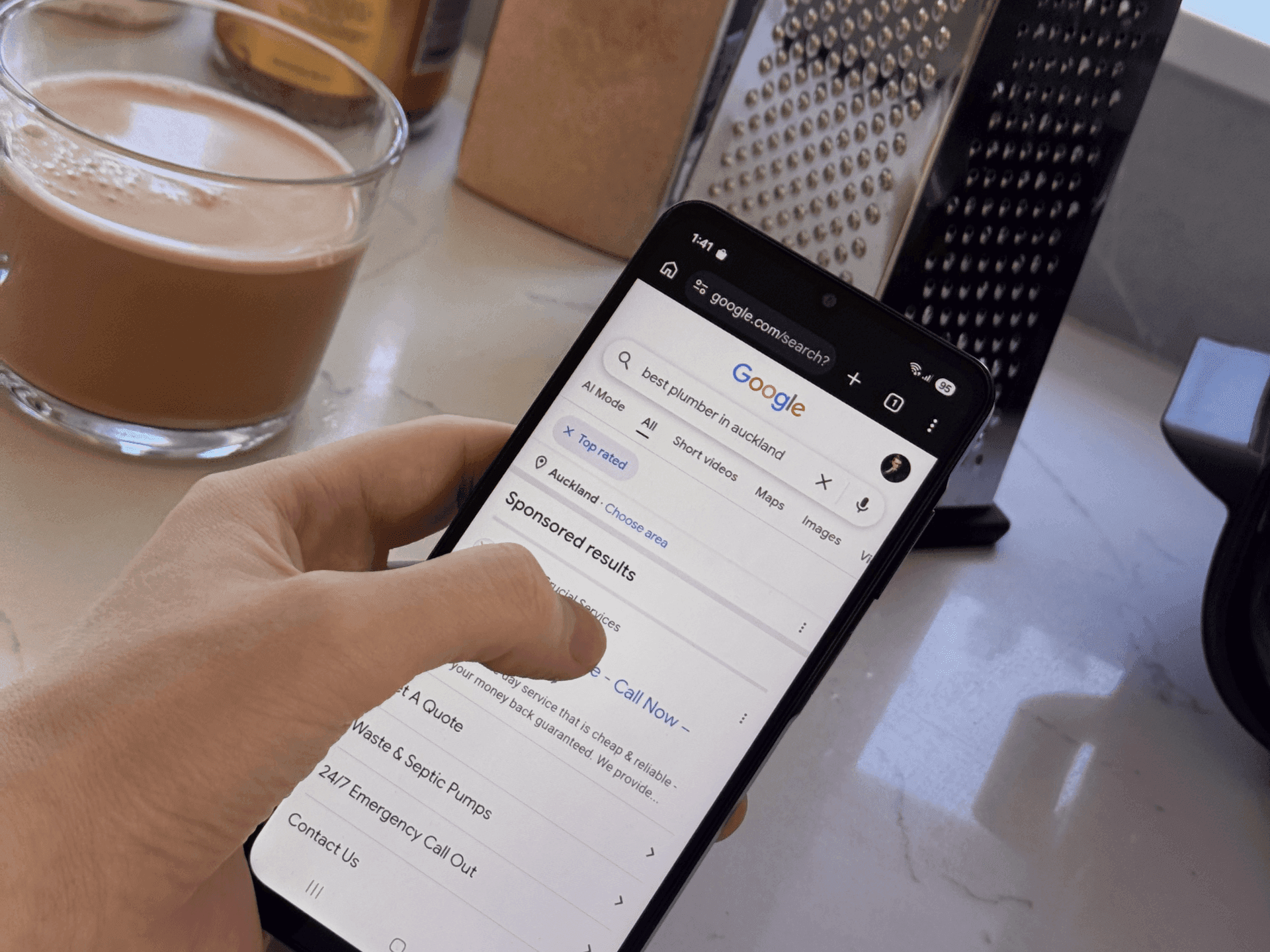
A website earns its place on a tradie’s overheads when it does four things: loads fast on a phone, makes asking for a quote effortless, shows exactly where you work, and proves you are legit before a stranger hands you their keys. Everything else is decoration.
Many websites for NZ tradies get at least one of those four wrong, usually because the site is a generic small-business template with trade photos dropped in. Your customers are searching from a phone, often with a problem that will not wait, and they ring whoever looks capable first. Good tradie web design starts from that reality. This article walks through what it means in practice, so you can judge the site you have, or the next quote you get for a new one.
What a Tradie Website Is Actually For
Traditional marketing methods still win jobs: word of mouth, the van, the site board, the mate who knows a good sparkie. What has changed is what happens between the recommendation and the phone call. People check first. They get your name, look at your website for thirty seconds, and decide whether you seem worth ringing. A well-designed website turns that check into contact. A bad one quietly sends years of word-of-mouth somewhere else.
That puts the website in the middle of your lead flow whether you planned it or not. A great website will not fix slow quoting or a patchy reputation. But a bad one hides good work, and that is the far more common problem.
The Quote Path: From Google to Enquiry in Under a Minute
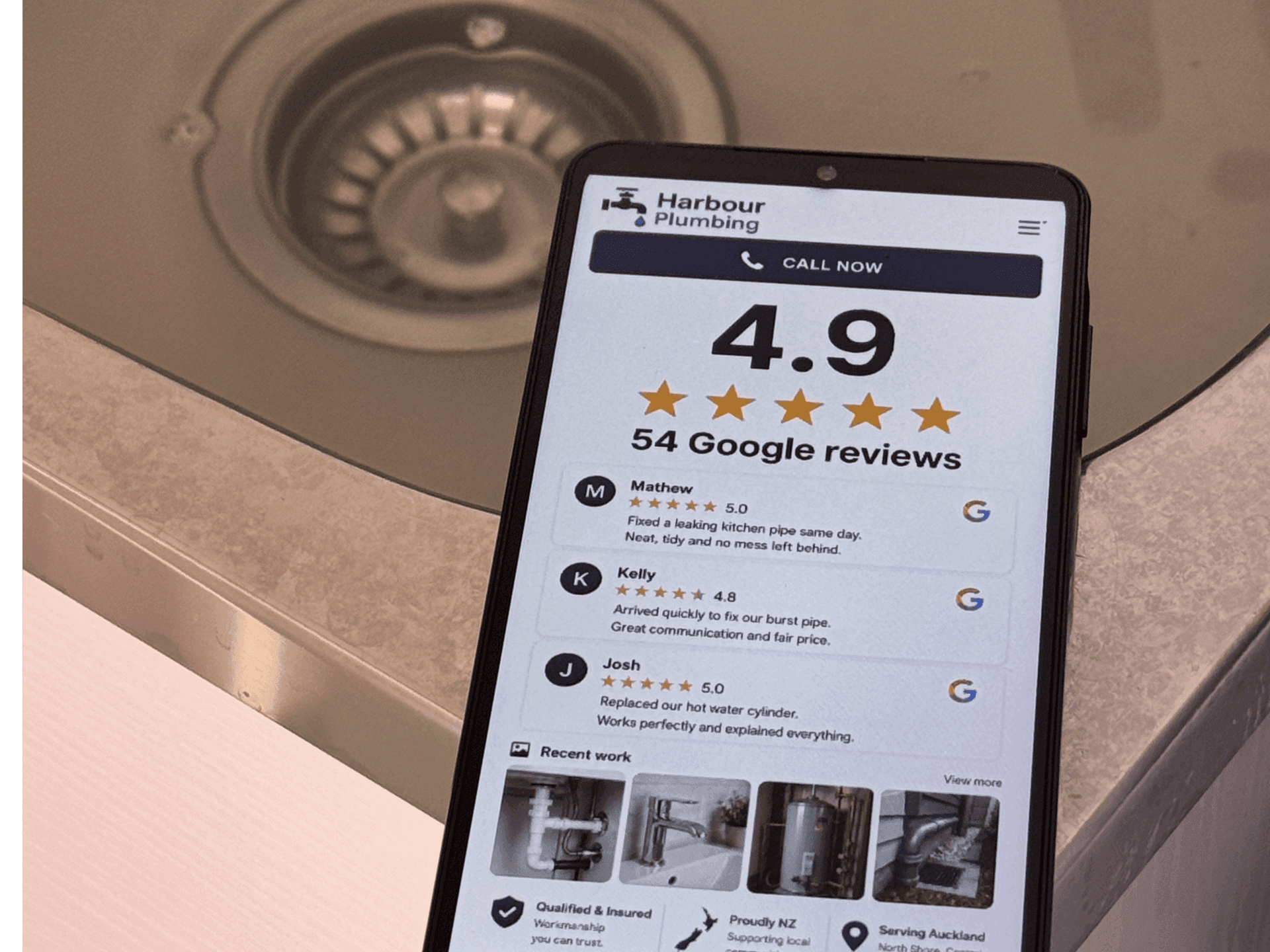
Count the taps between finding you and asking your price. Good sites for tradies make it one or two: a phone number that dials when tapped, and a short form asking name, suburb and what needs doing. That is the whole trick to how a website can turn visitors into booked jobs: remove every step between “I need someone” and “can you quote me”.
Generic quote forms ask ten questions because nobody decided which three matter. A long form feels thorough, but it works as a filter that keeps only the most patient customers, and patience is not what someone with water coming through the ceiling has. Buttons follow the same rule. Clear calls-to-action beat clever ones. For urgent residential work, Request a Quote and Call Now are the only two calls to action a visitor is looking for, so they belong at the top of every page, not buried on the contact page. A renovation or a landscaping project can afford a longer form with photos and a timeframe. Either way, ask only what the next step needs.
Mobile-First Is Non-Negotiable for Tradies
The searches a tradie lives on happen on a phone. Nobody boots a desktop over a burst pipe, and nobody saves a blocked drain for office hours. Google also crawls and indexes the mobile version of a site, so your Google rankings are built on the mobile version of your content, not the desktop site you check on office wifi. If the mobile version leaves out text or photos the desktop site shows, they are missing from the version Google ranks you on.
Mobile-friendly means the site technically works on a phone. Mobile-optimised means it was designed for one: a click-to-call number that dials on the first tap, photos that load on mobile data, text readable without pinching. A good developer will also optimise images and code until the pages are quick on 4G at a job site.

Service Area and Proof:
The Two Questions Every Visitor Asks
Show Where You Work
Name the suburbs and regions you cover, in plain text, on the pages people actually land on. Clear areas help customers self-qualify before they ring, and save you the calls you would have declined anyway. It also matters for search: a plumber in Henderson whose website never says Henderson is giving the competitors who spelled it out a head start, because search engines cannot guess a coverage map that is not written down.
Show Them You Are Legit
Potential clients are checking whether you are qualified, insured and real. Give them what they came for: registrations they can verify, like an electrician’s registration number or a builder’s LBP licence for restricted building work, the insurance you hold, and recent project photos with suburbs and dates. Before-and-after shots build trust faster than any slogan, and steady, honest reviews are the trust-building content that keeps selling while you are on the tools.
The Five-Minute Self-Check
Search Like a Customer
Type your trade and a suburb you want work in into Google, on your phone. Note who shows up before you do
Open Your Site on Mobile Data
Not the office wifi. Count the seconds until you could actually read and tap things
Try to Get a Quote From Yourself
Time it from landing on the site to pressing send. If it takes more than a minute, look for the questions you can cut
Check Your Areas Are Named
A visitor should know within one scroll whether you cover their suburb. “Auckland wide” is a start, not an answer
Look for Proof
Recent job photos, reviews, licence details. If a stranger could not confirm you are legit in one scroll, they will not try harder
Not Sure If Your Website Is Costing You Jobs?
If the self-check stung, a second opinion costs nothing. We will look at your quote path, speed and local visibility, and tell you plainly what is worth fixing and what is fine.
Book a Free Discovery SessionWhy a Generic Template Fails a Trade Business
Most cheap builds start from the same generic template, and it shows. The homepage leads with a mission statement nobody reads. The gallery is a grid of stock photography, because the template was never meant to organise two hundred real job photos by suburb and job type. There is no project gallery a roofer could actually use, no real service pages for each trade and each area, and the quote form sits two menus deep because the template assumed enquiries could wait.
None of that is the template’s fault. Template website design, used straight out of the box, treats every business the same, and a trade business is not every business. Whoever is designing websites for tradies should be asking about your call-out patterns, your most profitable jobs and the suburbs you want more work from, before anyone mentions fonts. If the first question you were asked was about colours, you have your answer.
SAME-DAY JOBSA tradie’s website fails differently from a shopfront’s. When a shop’s site is down, customers still walk past and come in. When yours is slow or dead at 9pm, the homeowner books the next name on the list, and that job is gone before breakfast. Downtime does not just dent your image. It costs you work.
A Slow or Down Website Costs You Jobs, Not Just Image
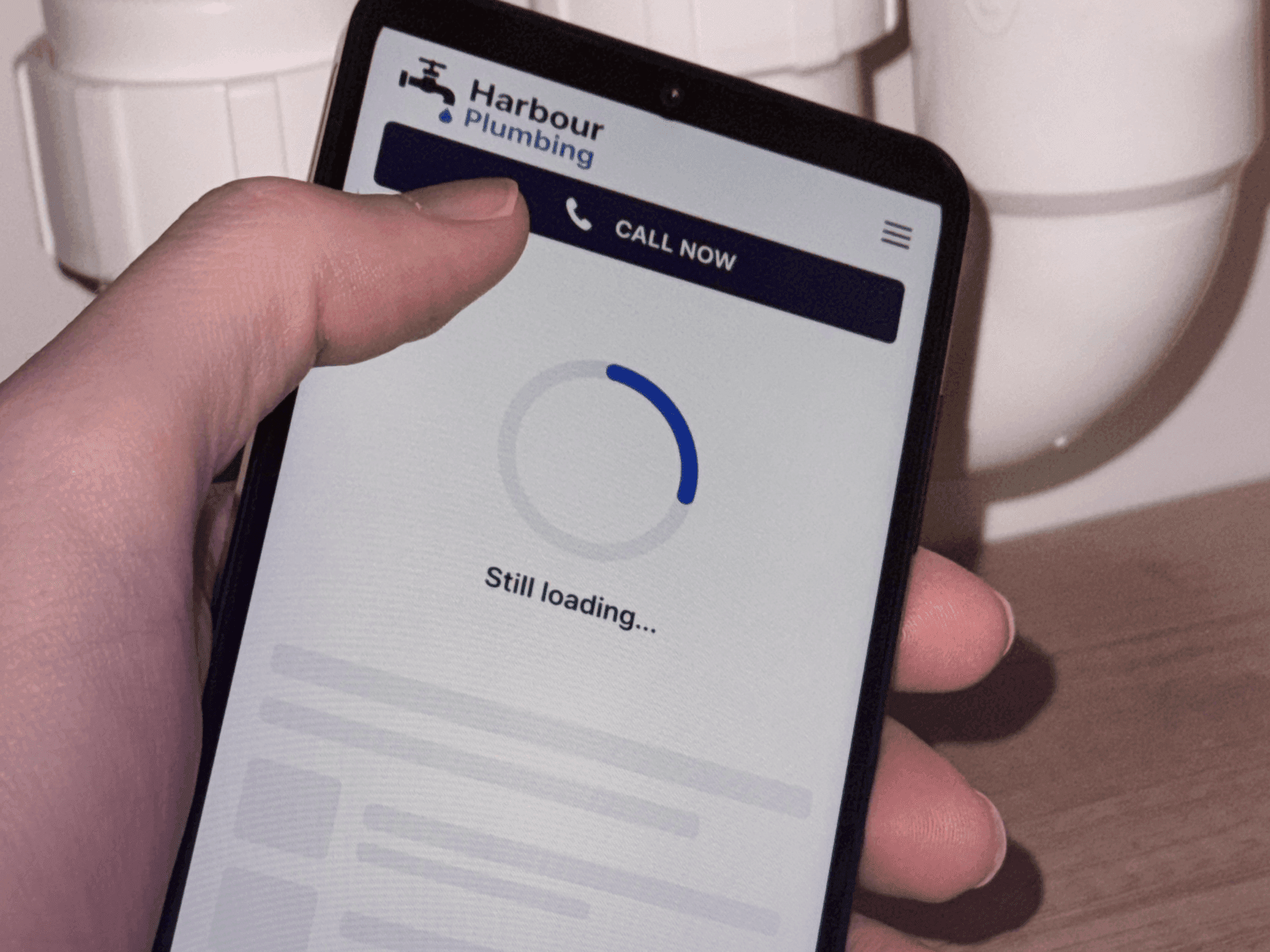
Trade work is same-day work in a way most businesses are not, so being unreachable for an evening carries a real price. A website that is down or crawling at 9pm is unreachable in the way that matters, and you will not notice it from a roof. We have written before about what cheap maintenance plans quietly skip. Across websites for trades, the same basics apply: someone should be watching uptime, keeping pages fast and treating an outage as urgent, without you having to ask. That is the job hosting and support exists to do. It is the unglamorous half of a website that earns its keep.
What a Tradie Website Costs (and When DIY Is Enough)
Website builders pitch themselves to businesses across New Zealand as the cheapest way to get online, and sometimes that is the honest answer. A sole-operator landscaper with more word-of-mouth work than the diary can hold needs little more than a page with a number on it, and free is a fair price for that. Plenty of Kiwi trade businesses run that way for years, entirely reasonably.
The line is growth. When you hire, add a van or push into new suburbs, the website stops being a formality and has to actually grow your business, and a $20-a-month website package starts costing you jobs invisibly. A professional website built around your trade, quote path first, typically runs into the thousands in NZ rather than the hundreds. Whether that is worth it comes down to one number: what an average job is worth to you after costs. Divide the quote in front of you by that figure, and you have the number of extra jobs the website needs to bring in before it has paid for itself. From there the maths answers itself one way or the other.
The right website is sized to where the business is going, not where it started. And if people are finding your new website but the phone stays quiet, look at the quote path and the proof before paying anyone to make it prettier.
Getting Found:
Ads, SEO and Your Online Presence
Paid Ads: Leads You Rent
Google Ads can generate leads within days of a campaign going live, if the clicks land on a page that does its job. Whether those leads are profitable depends on your trade, your area and the competition bidding on the same clicks. The catch is that lead generation you rent stops the moment the budget does, and urgent-trade clicks are not cheap. For most trades that makes ads a top-up, not a foundation. Every digital marketing channel you ever pay for lands people on the same website, which is exactly why the site has to convert first.
Local Search: Visibility You Own
Getting found organically is mostly unglamorous consistency. Your Google Business Profile and your website telling the same story, the same name and number everywhere, suburbs named on real pages, reviews that keep arriving. Those basics help tradies show up for the searches with a suburb in them, which are the ones that turn into work. Search engine optimisation compounds slowly, and ongoing SEO becomes worth discussing once these basics exist.
Websites That Work,
Built for NZ Tradies
Code Artists is a web design studio based in Auckland. We build websites for businesses whose site has to earn the invoice, and everything in this article is how we approach that job: quote path first, mobile first, proof everywhere. When we review a trade site, we time the quote path on a real phone and check the suburbs the owner wants work from against the pages the site actually has. We are set up to work with trade businesses that want a phone that rings, not a brochure that sits there. And the advice holds for tradies across NZ, whoever you hire: if a provider cannot explain their plan for your quote path and your suburbs, keep looking.
Ready for a Website
That Pulls Its Weight?
Book a free discovery session. Bring your current site or just your plans, and we will map out the quote path, the suburbs and what a build would actually involve. Plain answers, no obligation.
Book a Free Discovery Session